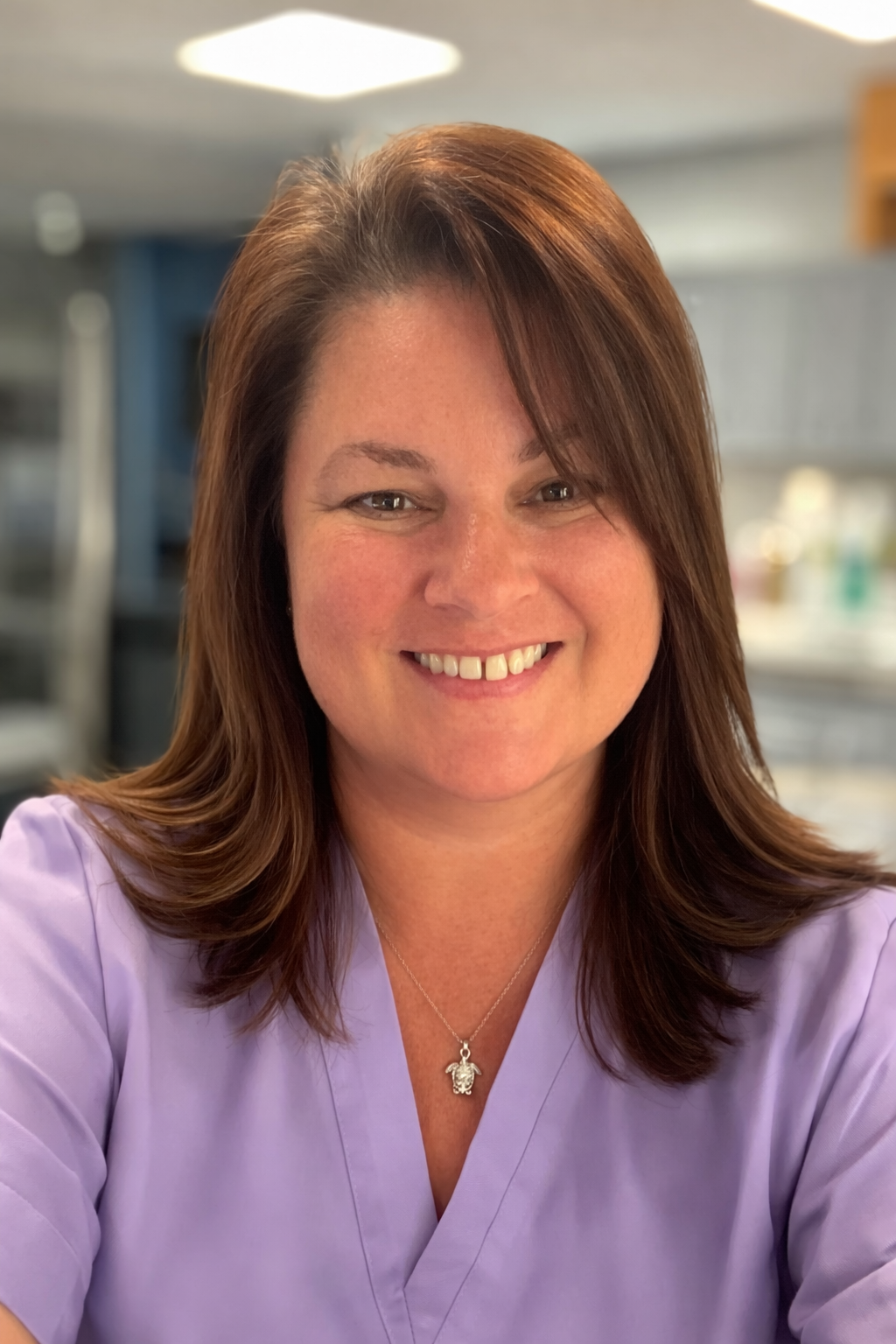
Niki DeValk, AAS, CVT, SRS

Contract Preclinical Surgical & Interventional Proceduralist | GLP/Non-GLP | Large & Small Animal Models

I'm Niki DeValk — an independent contract surgical and interventional specialist with more than 20 years of experience in veterinary medicine and preclinical research. Through NiKara Preclinical, I integrate directly into your team and facility, providing expert surgical execution, anesthesia management, protocol development, and technical training — so your studies run on time, on protocol, and to the highest standards of animal welfare and regulatory compliance.

My career spans high-volume clinical environments, university veterinary medical centers, and the most technically demanding catheter lab and hybrid OR settings in preclinical research. I've performed procedures ranging from routine rodent survival surgeries to complex open-heart, endovascular, and neuromodulation models in large animal species. That range — and the depth behind it — is what I bring to every engagement.

I work directly with you. No layers, no handoffs. Just clear, experienced surgical support tailored to your study, your species, and your timeline.

Precision, Experience, and Care — 20 Years in the Making

Credentials & Certifications

  • Certified Veterinary Technician (CVT) — 2006–present

  • Surgical Research Specialist (SRS) — 2025–present

  • Basic & Advanced Life Support, RECOVER Initiative (BLS/ALS) — 2021–present

  • A.A.S. in Veterinary Technology, Minnesota School of Business — 2006

Professional Memberships

  • Academy of Surgical Research (ASR)

  • American Association for Laboratory Animal Science (AALAS) — National & MN Chapters

  • Minnesota Veterinary Medical Association (MVMA)

  • Minnesota Association of Veterinary Technicians (MAVT)

  • National Association of Veterinary Technicians in America (NAVTA)

  • American Association of Veterinary Anatomists (AAVA)

  • RECOVER — The Reassessment Campaign on Veterinary Resuscitation

Owner & Senior Preclinical Surgical Specialist | NiKara Preclinical 2025–Present

  • Contract proceduralist providing surgical and interventional execution, protocol writing, animal model development, technical and scientific staff training, workflow analysis, and controlled document development for preclinical research programs.

Laboratory Operations Manager, Preclinical Surgeon & Interventionalist | Element Research Group 2022–2025

  • Served as primary surgeon and interventionalist across GLP and non-GLP studies. Managed laboratory operations, staff, and consumables. Authored SOPs, laboratory policies, and program overviews. Collaborated in leadership to achieve and maintain AAALAC accreditation. Served as Corporate Safety Manager, Radiation Safety Officer, and Controlled Substance Administrator.

Senior Surgical Technician, Preclinical Proceduralist | Multiple CRO/MRO Sites 2018–2025

  • Executed advanced surgical, anesthetic, radiologic, and interventional procedures across GLP and non-GLP studies. Managed procedure rooms as circulator and anesthetist. Led training, improvement, and efficiency initiatives with cross-functional teams.

Senior Surgical / Anesthesia & Pain Management Technician | University of Minnesota VMC 2015–2018

  • Provided advanced anesthesia and perioperative care under board-certified anesthesiologists for routine through critical procedures. Designed and implemented the hospital's post-anesthesia care unit (PACU) program.

Anesthetist / Surgical Technician | Blue Sky Veterinary Services / MNSNAP 2010–2014, 2017–2018

  • Delivered anesthesia and recovery for high-volume HQHVSN programs. Led volunteer operations and developed perioperative, ICU, PACU, and outpatient care standards.

CVT, Lead Surgical Technician | Animal Humane Society 1998–2001, 2008–2010

  • Oversaw high-quality, high-volume surgical team operations, providing anesthesia and surgical support for shelter patients.

Experience Snapshot

Procedural Capabilities

Species: swine, sheep, goats, bovine, equine, canine, feline, rabbit, rat, ferret, guinea pig, mouse, and avian. The list below is representative, not exhaustive.

  • Major and minor survival and non-survival surgical models (GLP and non-GLP), inductive disease modeling, corrective and therapeutic surgical interventions, open and minimally invasive approaches, acute and chronic implant models including device placement, revision and explantation, and vascular access creation and maintenance.

  • Percutaneous and transcatheter vascular interventions, endovascular device deployment and retrieval, image-guided procedural models utilizing fluoroscopy and adjunct imaging, and complex catheter-based procedures in catheterization lab and hybrid OR environments.

  • Multispecies anesthetic management for survival and terminal procedures, TIVA/PIVA and CRI/TCI-based protocols, neuromuscular blockade, regional and locoregional techniques, advanced airway and ventilation management, and comprehensive multimodal pain management across pre-, intra-, and postoperative phases.

  • Advanced hemodynamic and respiratory monitoring, arterial and venous catheter placement for invasive monitoring and sampling, blood gas sampling and physiological parameter optimization, arrhythmia recognition and procedural management.

  • Hemostasis and hemorrhage control models, GI surgical models including ablation, resection, anastomosis and ischemia/reperfusion, cardiothoracic procedures including thoracotomy and chest tube placement, wound healing and tissue repair models, thrombogenicity models, and microsurgical models including vascular anastomosis, nephrectomy, and peripheral nerve repair.

  • Oncology models including tumor induction, RFA, cryoablation, and image-guided FNA; dental and craniofacial procedures including implant placement, calvaria defects, and mandibular reconstruction; spinal models including posterolateral fusion and pedicle screw fixation; and orthopedic models including critical-sized bone defects and osteotomy procedures.

  • Telemetry device placement, peripheral nerve and tendon grafting, implantable pulse generator (IPG) placement and programming, peripheral and central nerve stimulation device implantation, and neuroprotective procedural models.

  • Procedure replication and skills validation for internal teams and sponsors, wet lab, dry lab, and simulation-based training models, and protocol walk-throughs aligned with GLP, IACUC, USDA, and AAALAC standards.

  • Gross necropsy and tissue collection for studies not requiring a DVM pathologist, and device and procedural outcome assessment to support study endpoints.

Ready to discuss your next study?

I'd love to hear what you're working on.